
Despite A Strong “El Nino,” Prospects For A Wet Winter In The Southwest Remain “Uncertain”
The popular theory about an “El Nino” condition in the eastern Pacific Ocean is that it often encourages the production of a lot of winter rain and snow in the southern United States
The operative word here is “often.”
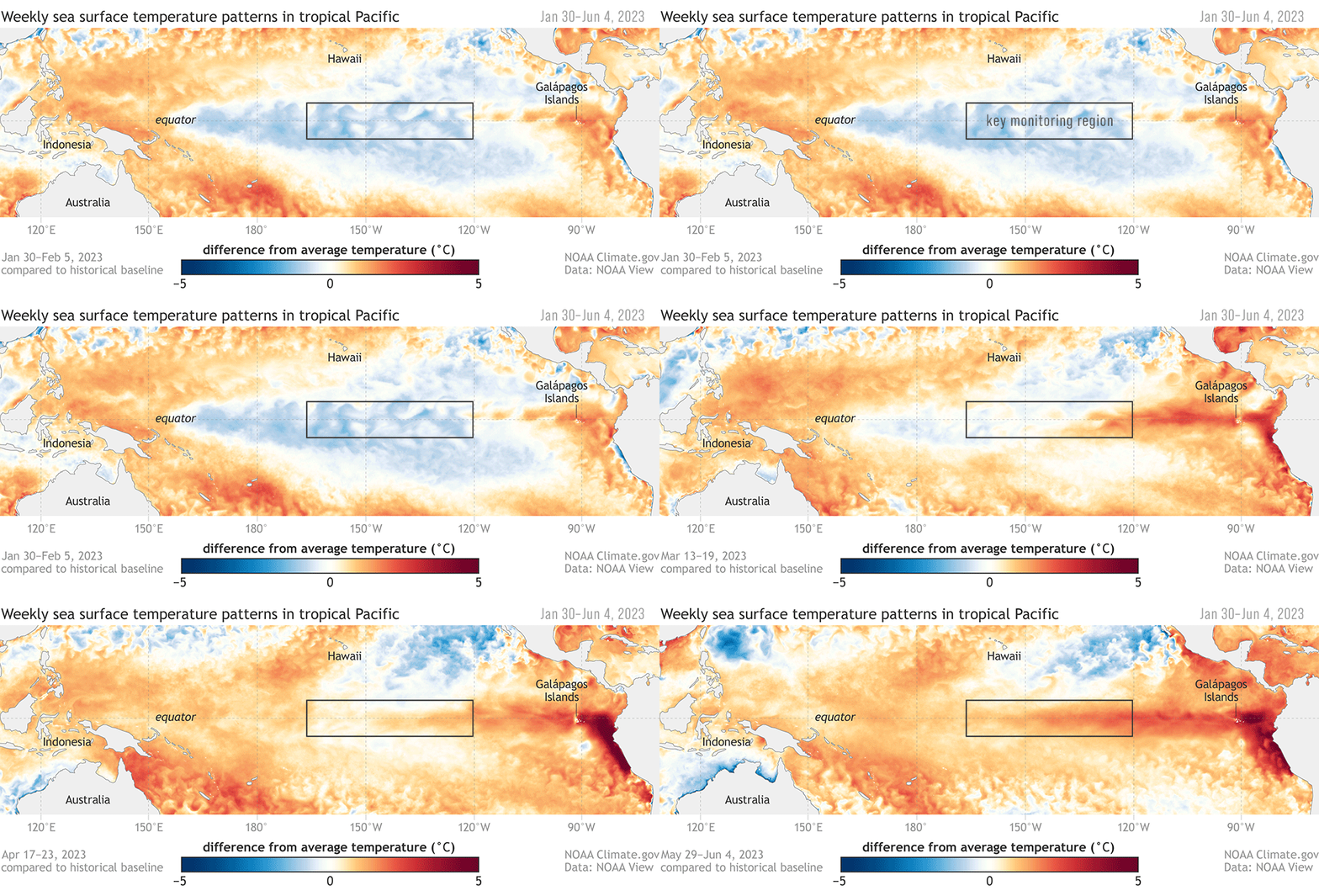
According to Mark O’Malley of the National Weather Service, there is a great deal of uncertainty regarding the much-heralded El Nino condition this year.
“I will emphasize a lot of uncertainty,” said O’Malley to the Interagency Coordinating Group (ICG), an advisory body to the Arizona Governor on drought issues.
“El Nino is the big signal that we’re looking at. Theoretically, this will change our jet stream pattern this winter. Theoretically, it will bring more storm systems into the southern US. But a lot of forecasts aren’t showing this.”
O’Malley made his El Nino observations before the ICG as part of his assessment of the approaching 2023-2024 winter snowpack season.
The ICG has been providing drought recommendations to the Arizona Governor since 2006.
It is comprised of representatives from state, federal, tribal and non-governmental organizations and meets twice a year to evaluate drought conditions and consider recommendations to the governor. Arizona has had a Drought Emergency Declaration in effect since June 1999 and a Drought Declaration from the ICG has been in effect since May 2007.
Weather forecasters have “good confidence” that this El Nino – which has been present off the California coast through most of the summer - will remain through the winter, said O’Malley, adding that there is a “better than 90 percent chance” it will reach the “strong” category.
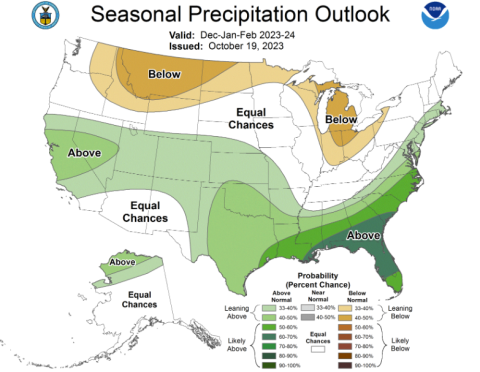
Even then, there are no clear indications if the system will prompt a dry winter in the Southwest or a very wet one.
“There’s no tilt in the odds,” he said.
“There’s a distinct trend over the last 30 years (in the southern U.S.) toward warming. We might end up very near normal (in terms of moisture)… there’s just a lot of uncertainty going forward.
“There have been some pretty dry El Nino years in Arizona,” he added.
“Water managers need flexibility. They have to look forward to a very dry year, or a very wet year.”
The entire November 7 ICG meeting can be viewed here. In addition to O’Malley’s assessment of the coming winter, Erinanne Saffell, Arizona State Climatologist reviewed the past winter and summer seasons, which were remarkable for their extremes: an “amazing spring” that included the wettest January since 2010, and a shockingly hot and dry summer in much of Arizona.
“April 2023 was the third driest ever,” said Dr. Saffell, while July “was very exceptional with the high pressure, all across the south. July was exceptional everywhere in the world.”
Here in Arizona, she noted, July was the second-driest on record.
Looking at moisture in the state in the long term, however, depicted Arizona as having had a reasonably wet and cool year.

“We’re happy with what (moisture) we got this year,” said the climatologist. “Most of that came from winter. We had the second-coldest water year in the last 30 years. Had a lot of precipitation and a really cold winter.”
“But July just really knocked us out. It was astonishing to see what happened.”
ADWR Director Tom Buschatzke serves as co-chair of the ICG. Buschatzke observed during the meeting that the Lower Colorado River Basin states will receive 7.48 million acre-feet of river water in the coming year, “even if we have a wet year in the Basin.”
He added that analysts have consistently been “over-projecting” likely runoff amounts “for the last 20 years” – in part a consequence of dry watershed soils in the western Rocky Mountains absorbing runoff before it reaches the river itself.
“That’s something we ought to discuss with the federal government.”
The ICG panel once again voted to recommend to Arizona Governor Hobbs that she continue declaring a drought condition.