
Arizona, Lower Basin partners, commit to continuing efforts to find common ground on new Colorado River operations rules
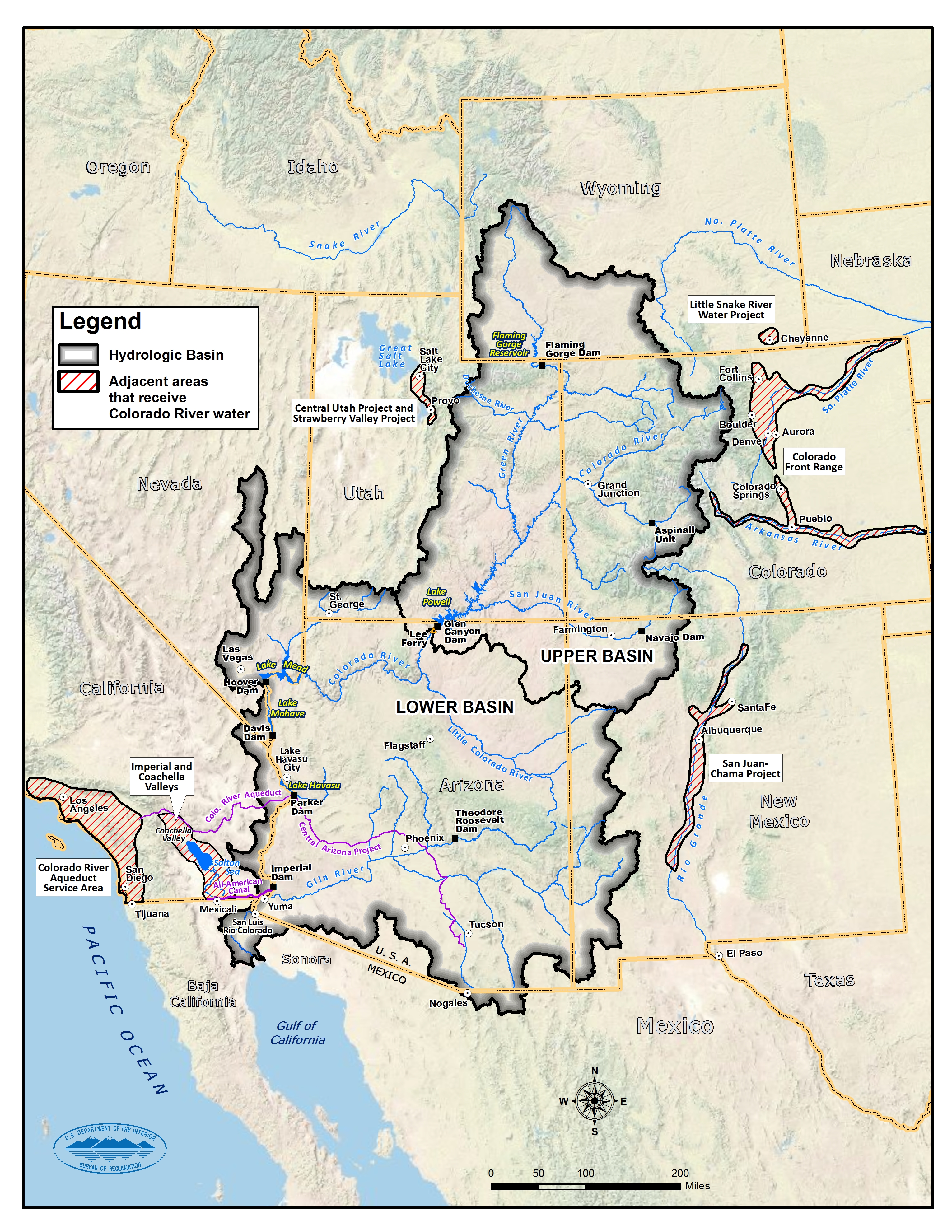
As Colorado River negotiations broke down just prior to the federal government’s Feb. 14 deadline, Arizona’s chief negotiator repeated his commitment to seeking a collaborative solution to river management.
Arizona remains committed to compromise and accommodation,
said ADWR Director Tom Buschatzke.
The negotiations may be at an unfortunate stalemate, but they are not at an end – not, at least, if our river partners in the Upper Basin accept the reality that Arizona cannot be asked to sacrifice its water security while receiving virtually nothing in return.
The Department of the Interior had set a February 14 deadline for the seven Colorado River states to come to an agreement on proposed operating guidelines for the invaluable river system once existing guidelines conclude after 2026.
The four Upper Basin states of Colorado, New Mexico, Utah and Wyoming and the three Lower Basin states of Arizona, California and Nevada were unable to reach agreement by the deadline.
A primary stumbling block was a refusal on the part of the Upper Division states to accept specific delivery cutbacks, even during periods of serious drought-inspired shortages.
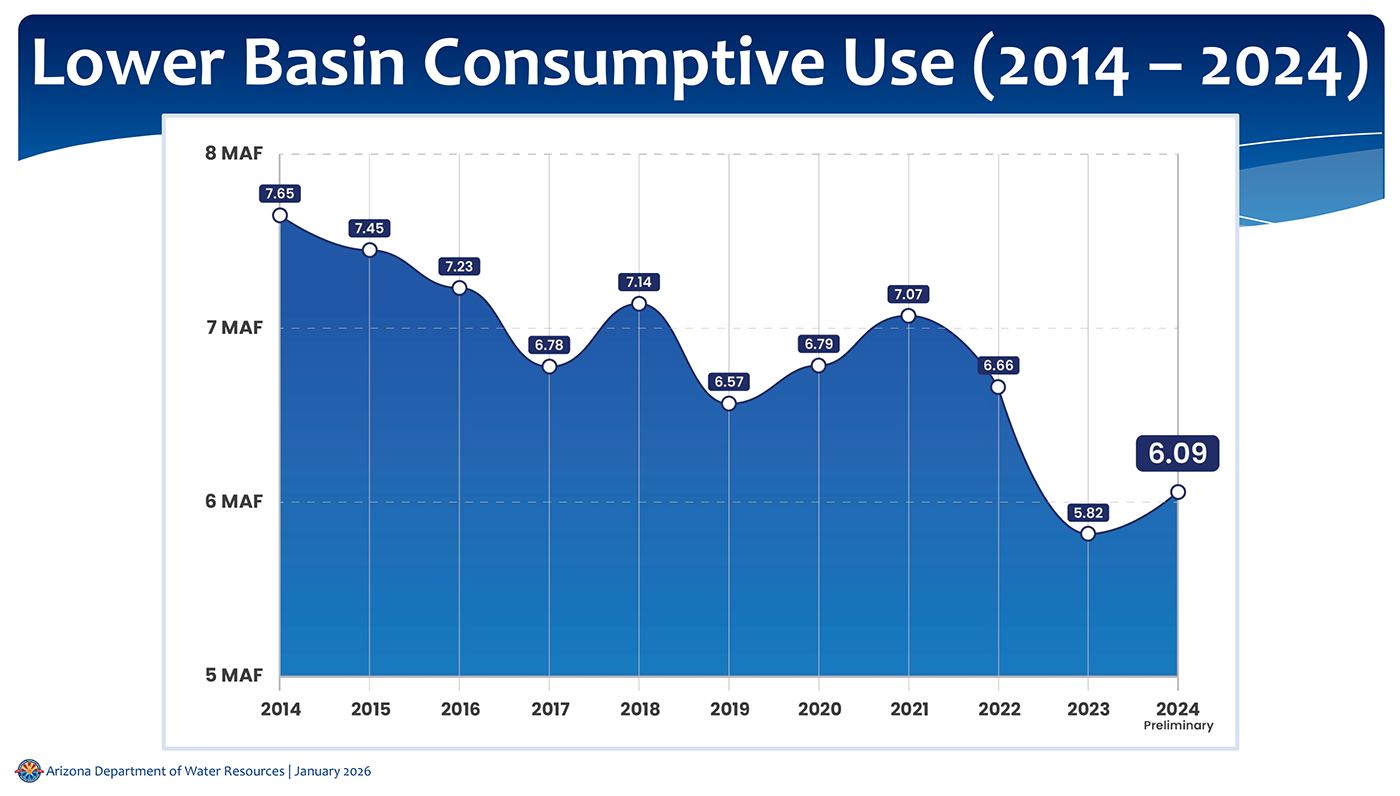
Representatives of the Lower Basin states have offered to respond to river shortages with substantial cuts to their Colorado River allocations: 27 percent for Arizona, 17 percent for Nevada and 10 percent for California. In recent years, Arizona alone has left a substantial portion of its 2.8 million acre-foot river allocation in Lake Mead.
In his own statement, released on February 13, Director Buschatzke restated his view that an equitable agreement requires that all Colorado River states share in shortages:
Through it all, these difficult negotiations still reduce to a simple truth: All of those who benefit from the Colorado River’s bounty must share in the responsibility to preserve the river’s health.
John Entsminger, Southern Nevada Water Authority General Manager and Nevada’s lead Colorado River negotiator also expressed frustration with the inability of the states to reach an agreement on river operations, but still noted his commitment to finding a workable solution to this crisis.
The river doesn’t care about legal interpretations, political comfort zones, or arguments about why a state can’t do more to conserve,
said Entsminger in a statement released on Friday, Feb. 13. Posturing doesn’t fill the taps.
The Bureau of Reclamation has released five alternative plans for river operation post-2026, all of which would seriously impact Arizona’s Colorado River supplies, especially river water delivered through the Central Arizona Project.
Director Buschatzke said that despite missing the deadline, all state representatives remain willing to discuss a possible compromise agreement.
The seven states haven’t precluded any more talks,
he said. We’re all still willing to talk.