
Governor, ADWR Director and CAP GM brief Arizona water leaders on Colorado River negotiations as federal deadline draws near
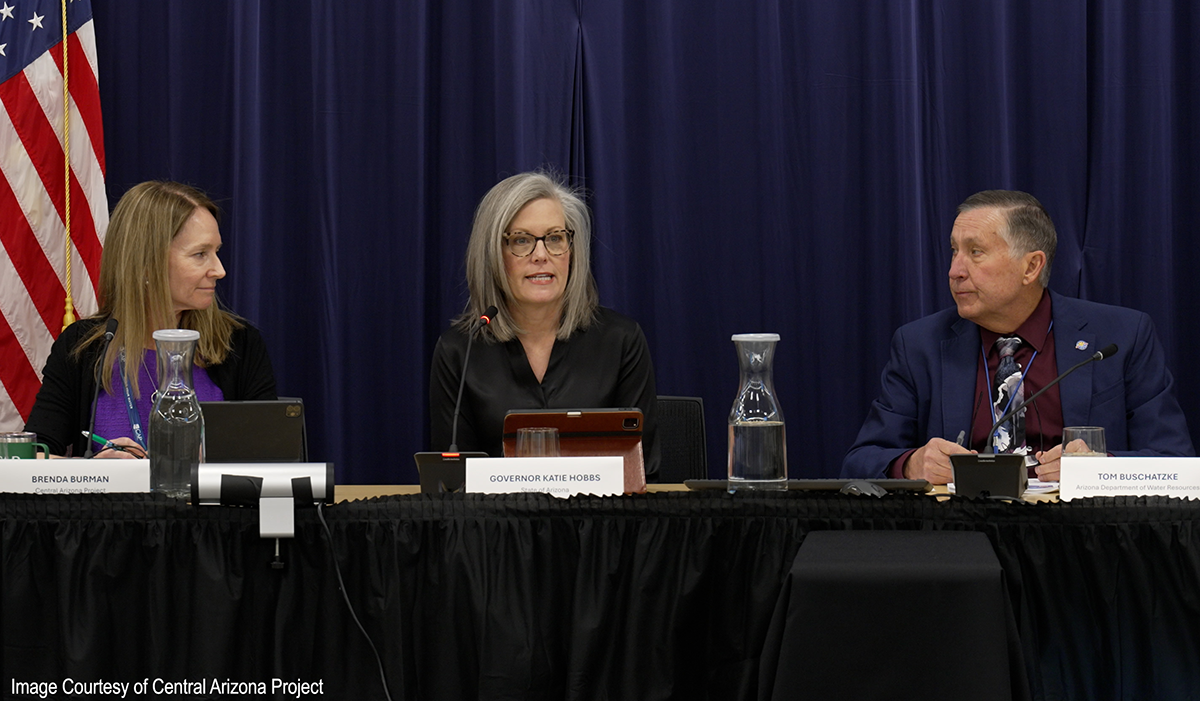
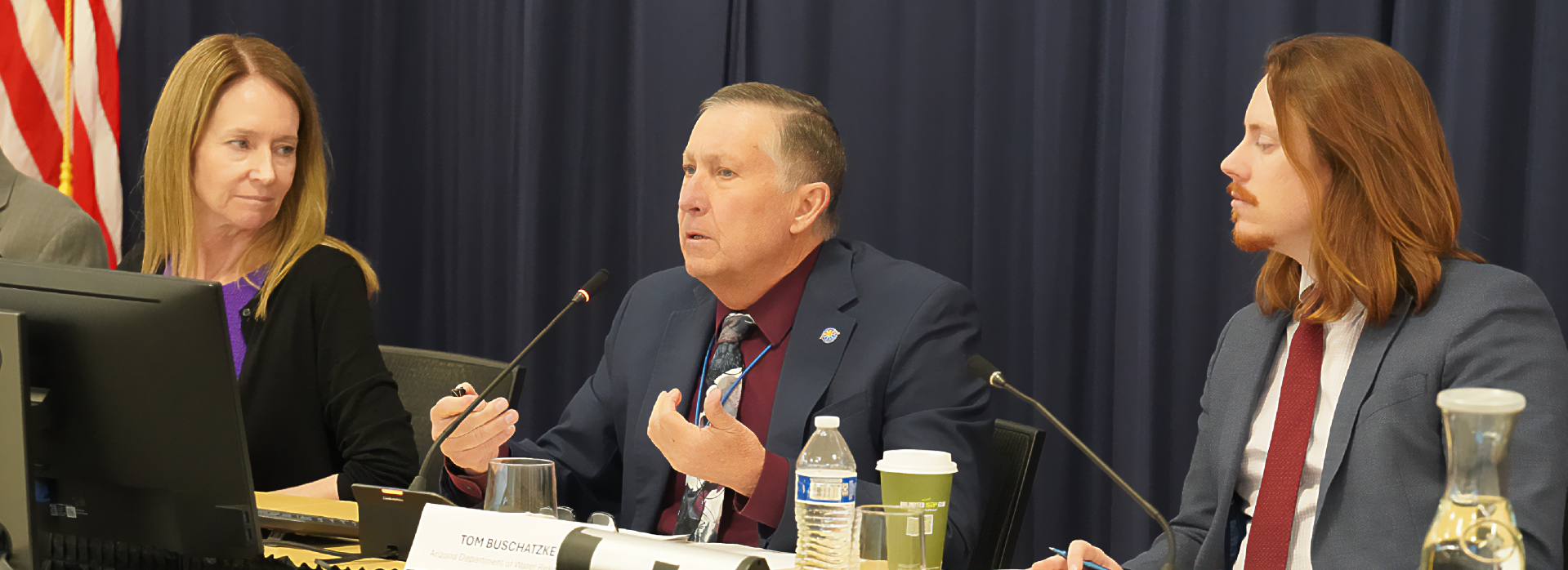
With the February 14 deadline for a conclusion of Colorado River negotiations fast approaching, ADWR Director Tom Buschatzke and Central Arizona Project General Manager Brenda Burman on February 2 briefed a statewide coalition of water leaders on progress.
Director Buschatzke described for the members of the Arizona Reconsultation Committee (ARC) the recent meeting with Interior Secretary Doug Burgum and Colorado River Basin Governors, including Arizona Governor Katie Hobbs.
Governor Hobbs told the ARC members that the Colorado River is everything to Arizona.
It allows us to grow the nation’s winter produce and some of the country’s most high-value agriculture. It runs through the taps in millions of homes. It is sacred to 22 of the 30 Basin tribes that live in Arizona. It generates hydropower that we rely on from both Glen Canyon and Hoover Dams.
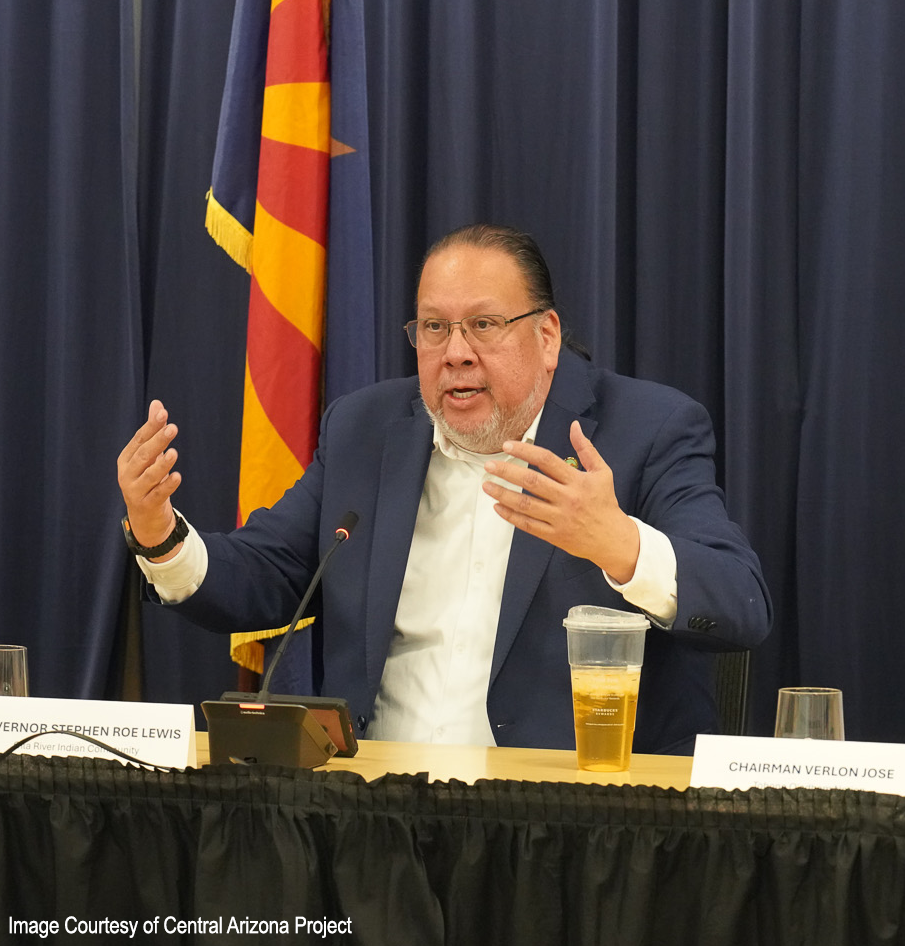
The Governor noted that the Lower Basin states of Arizona, California and Nevada already have offered to reduce river-water usage collectively by 1.5 million acre-feet, which includes Arizona putting 27 percent of its water supply on the table.
The ARC is a coalition of tribal leaders, farmers, municipal officials and water suppliers. Absent a consensus agreement among the states, Buschatzke told the members, Arizona is prepared to defend its water rights through legal action based on the 1922 Colorado River Compact.
Director Buschatzke described a proposed phased approach
to a seven-state agreement that could begin with a first phase of between one to five years. He noted that you could stabilize Lake Mead with an annual flow of 8 million-acre feet plus the 1.5 million acre-feet of cuts proposed by the Lower Basin states.
Buschatzke described his frustrations with Upper Basin proposals that have always been a moving target.
When we get into the assumptions about how the Powell to Lake Mead releases perform and it starts to get really weedy and I start to see magic occurring and it’s hard to assess the reality.
The Director credited the federal government for a proposal to move volumes of water from the Upper Basin to help stabilize the two major reservoirs.
We believe the federal government has the authority and the obligation to operate those reservoirs to try to meet the Compact obligations of the Upper Basin to the Lower Basin.
At a press event following the ARC meeting, Director Buschatzke told reporters that absent a consensus agreement, Compact compliance action is likely,
Buschatzke later told reporters. Can't tell you when, but that seems to be the path we're on.
Buschatzke noted that Arizona has already performed the heavy lifting,
providing nearly half of the water surrendered to stabilize Lake Mead over the last decade. He expressed frustration that the Upper Basin states, which include Colorado, New Mexico, Utah, and Wyoming, remain resistant to mandatory reductions.
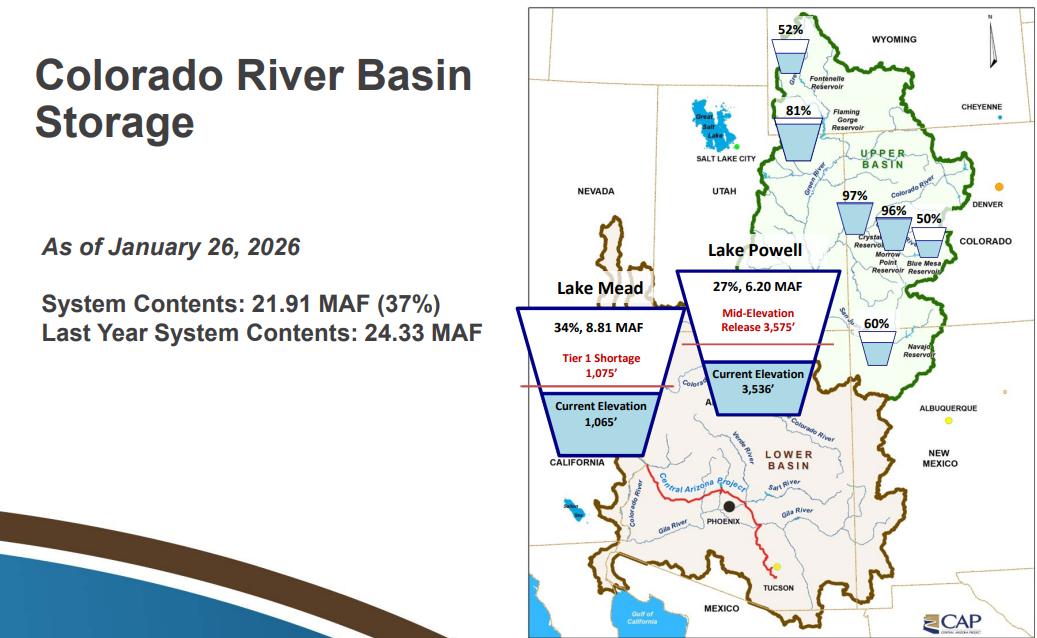
CAP General Manager Burman underscored the gravity of the situation, noting that a breach of the 100-year-old compact is a looming possibility by 2026 or 2027 if current trends continue.
We need everyone to be taking on some risk,
Burman stated. All of the risk cannot fall to the Central Arizona Project and Arizona. That's simply not acceptable
.
Governor Hobbs, who addressed the ARC group at the start of the meeting, has expressed cautious optimism
that a path forward may emerge, though she also emphasized that Arizona will not accept meaningless commitments from other states.
If states fail to reach an agreement, the federal government is expected to finalize its own management plan by late summer.
Director Buschatzke described for the ARC members what he considers the top priority of the Upper Basin states, which is to have the Lower Basin waive or temporarily waive its Compact claims against them.
My response, at the request of Governor Hobbs, was that we will consider a Compact waiver that is commensurate with Upper Basin actions.
In her remarks on the meeting with Interior Secretary Burgum, Governor Hobbs noted that I also made it clear that the Federal Government needs to tap into the federally-owned reservoirs in the Upper Basin that currently hold millions of acre-feet in storage.
That water is intended to satisfy the Upper Basin’s compact obligations, and now is the time to release some of it - not all of it - to protect Lake Powell.
They have the authority, and they need to act.