
ADWR Director briefs State House committee on progress toward “the new paradigm” for Colorado River operations
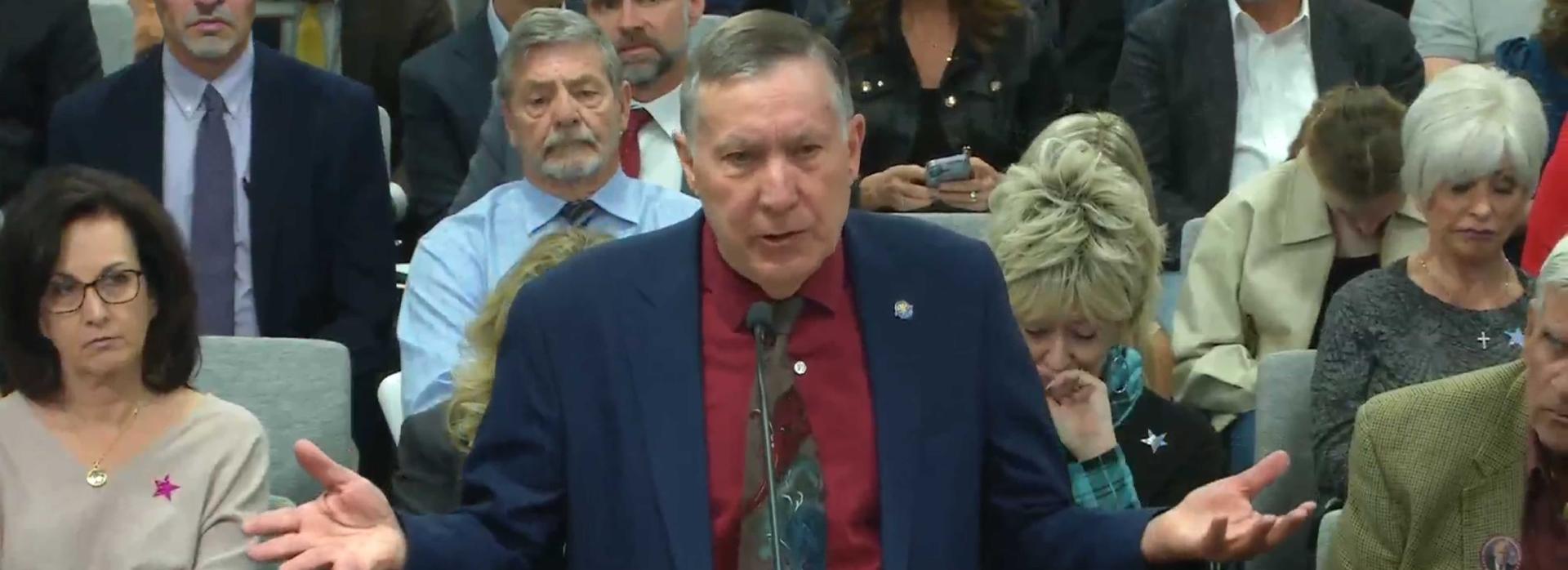
On Tuesday, January 27, Arizona Department of Water Resources Director Tom Buschatzke delivered an important presentation to the Arizona House Natural Resources, Energy & Water Committee regarding the challenges he is facing in negotiations over how to operate the Colorado River once current operating guidelines expire at the end of this year.
The Law of the River is a complicated set of briefs that would probably stand from ceiling to floor if we had paper to show that,
said Director Buschatzke to the committee members.
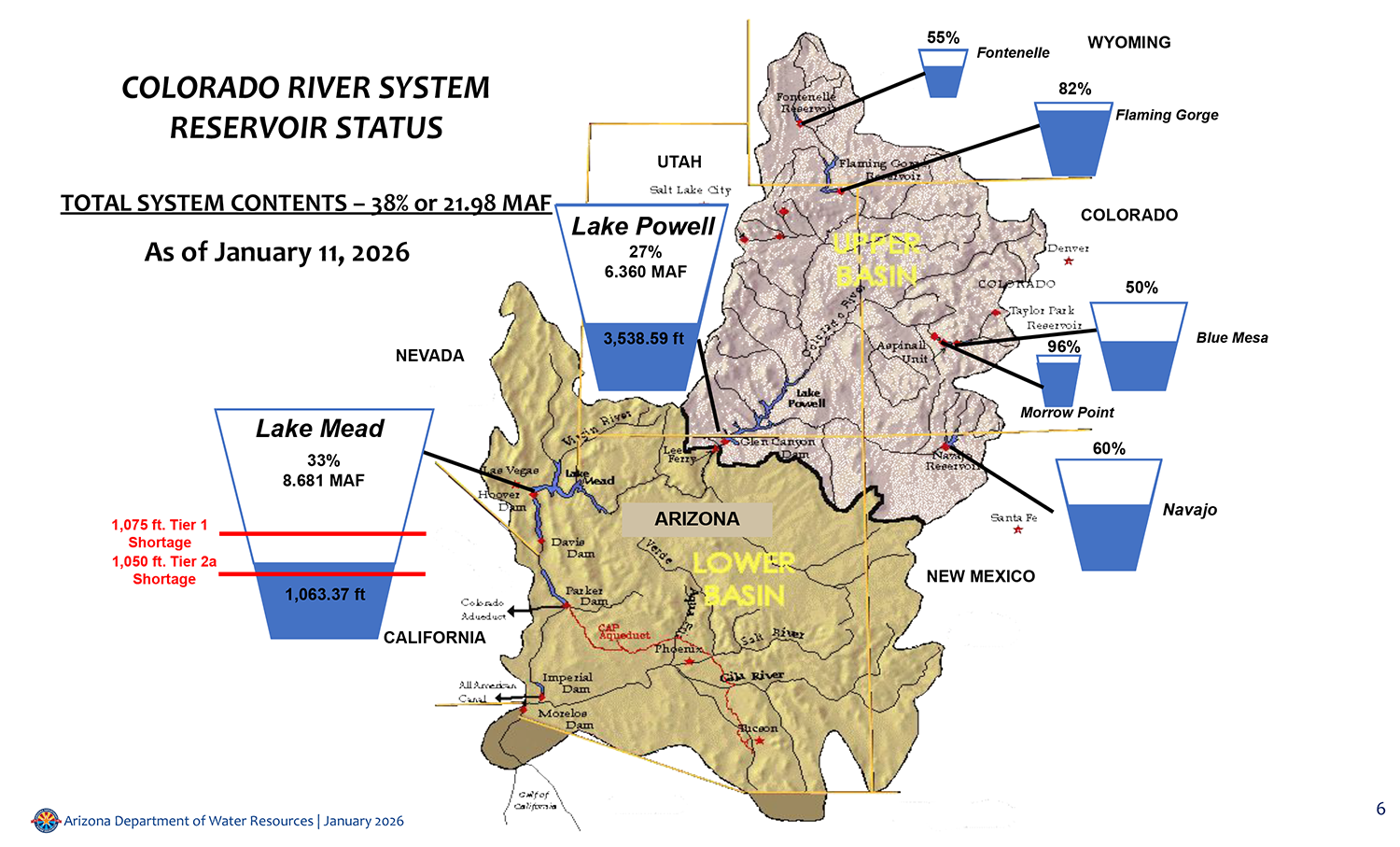
One slide in the Director’s presentation depicted the current water-level status of all the major reservoirs in the Colorado River system, including those in the river’s Upper Basin. He noted that Upper Basin reservoirs, which serve Colorado, Utah, Wyoming and New Mexico, are substantially more full than Lake Powell and Lake Mead, which provide water for the Lower Basin states of Arizona, Nevada and California.
We’re in a shortage condition in which Arizona is currently taking a 512,000 acre-foot reduction,
said Buschatzke. Most of that reduction, he noted, comes out of Arizona agriculture and underground storage programs.
This is one of the bones of contention that we are having with the Upper Basin. I believe it is a pretty tough thing for the State of Arizona to ask our people to take cuts based on the elevations and the volumes of water in Lake Powell alone.
The Director observed for the committee the enormous volumes of water that the Lower Basin, and Arizona in particular, has conserved in Lake Mead since the adoption of the earliest interim guidelines
in 2007 to prepare for potential shortages on the river system.
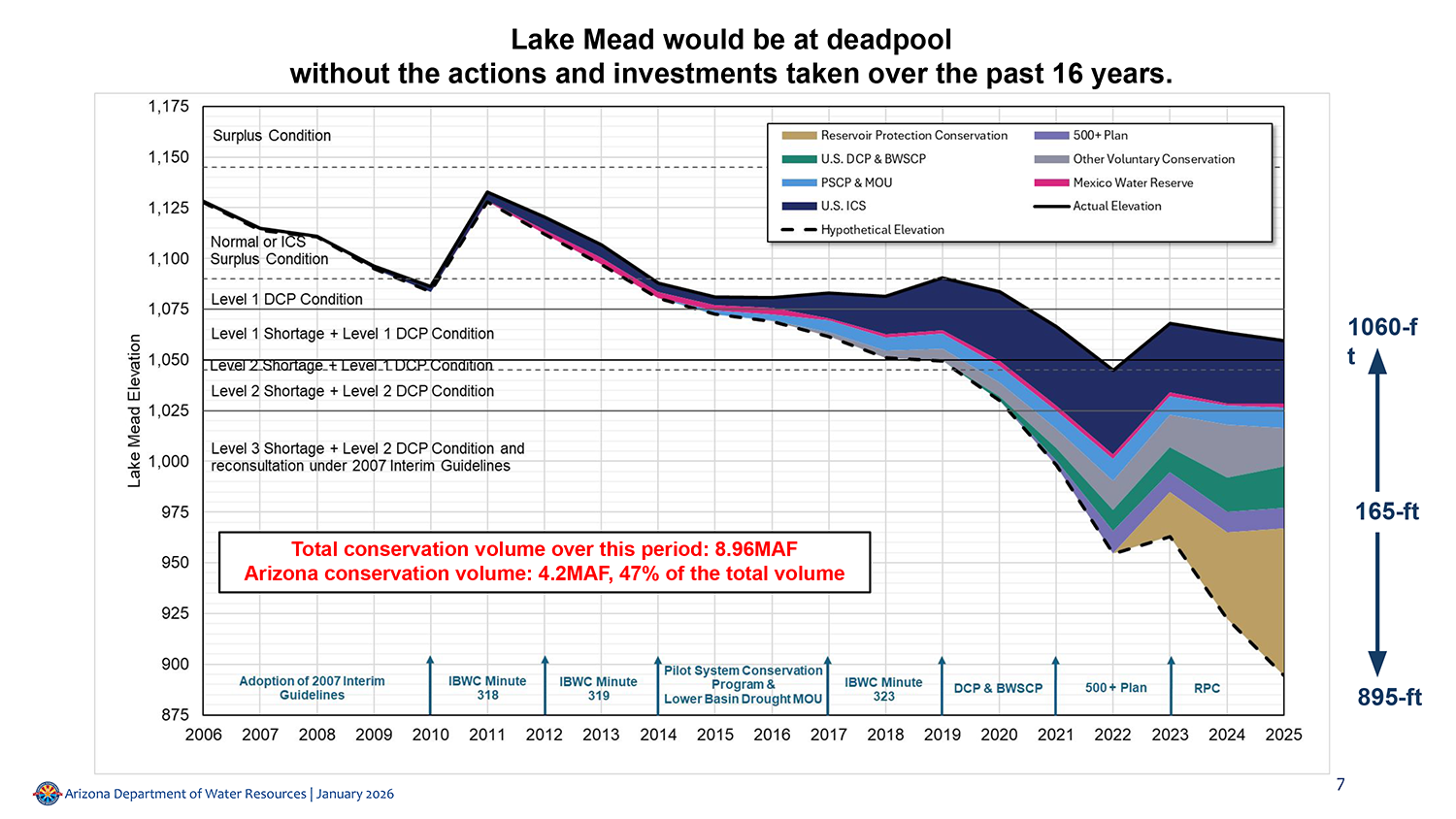
Since 2007, the Lower Basin has conserved 8.96 million acre-feet of water in Lake Mead, including 4.2 million acre-feet conserved by Arizona alone. Without those conservation measures, Lake Mead already would have reached deadpool
– the point at which little more than a trickle of water would have flowed downstream through the Grand Canyon.
We would be in a tremendous crisis right now if we had not done all of this conservation. And you can see that Arizona has done the heavy lifting.
The Upper Basin states have consistently rejected any enforceable conservation or reduction requirements,
he noted.
As he has expressed many times recently, Buschatzke itemized for the lawmakers the three elements of a negotiated deal that Arizona would require:
- A
release curve
from Lake Powell that results in a relatively stable Lake Mead - Substantial use of water from the reservoirs above Lake Powell
- Water-use reductions in the Upper Basin to stabilize the system
He reminded the House members that any final agreement regarding the Colorado River requires formal approval from the Arizona Legislature, a requirement unique to Arizona that adds significant weight to current negotiations.
The Colorado River states face a mid-February timeline to present a deal in principle
to the federal government. Buschatzke and Governor Katie Hobbs participated in last-ditch talks with federal officials and other basin governors in Washington, D.C., on Friday, January 30.