
Arizona continues drought declarations as snowpack outlook remains challenging
With nagging drought conditions now stretching well into a third decade in the Southwest, we have gotten used to hearing meteorologists utter the phrase hotter and drier than normal
when announcing their seasonal weather predictions.
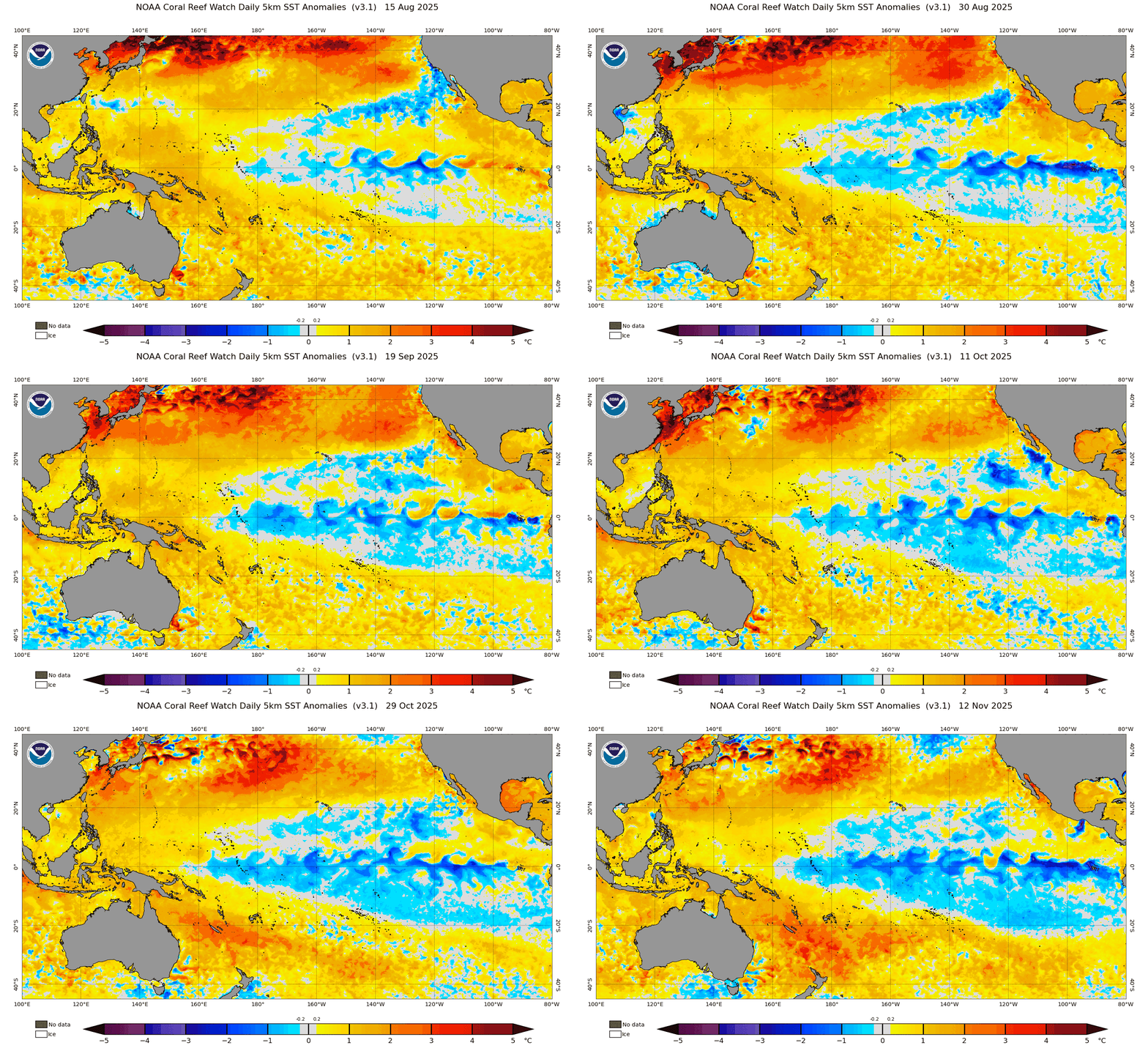
And, so it was on November 12 when Mark O’Malley of the National Weather Service told the Drought Interagency Coordinating Group (ICG) that a relatively mild La Nina
condition in the eastern Pacific Ocean could usher in those hotter and drier conditions to Arizona this winter.
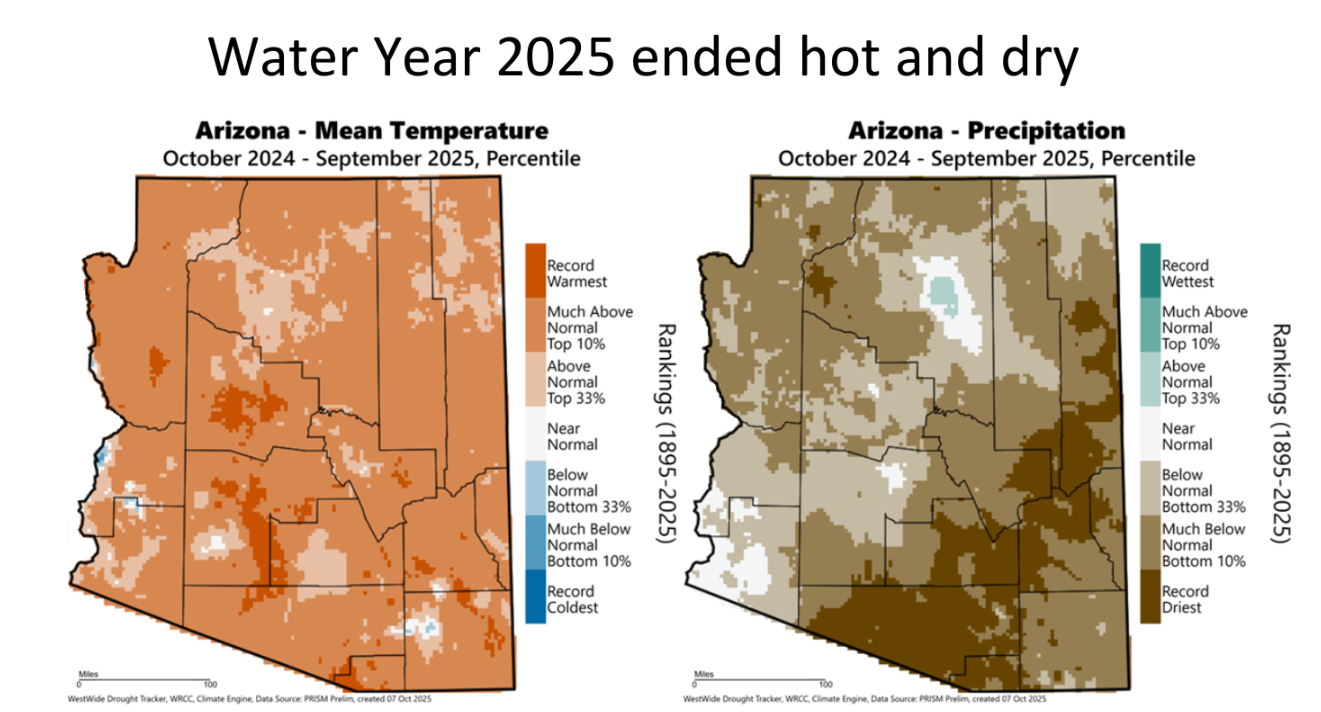
Hotter, drier winter conditions, of course, impact the capacity for Arizona’s mountainous regions to build up snowpack, a vital source of the state’s water supply. What’s more, in recent years, drier-than-normal conditions in the late summer and fall have contributed to dry soil conditions, which, come spring, have tended to soak up a much greater percentage of snowpack runoff that in normal years would flow into the region’s rivers.
The substantial rainstorms that swept into the Southwest in late September and early October, however, helped saturate the watershed at a propitious time. According to O’Malley, the end result should be that a greater percentage of the mountainous winter snowpack should make it into the river systems and, ultimately, into state and regional reservoirs.
O’Malley emphasized caution even amid those modestly improved outlooks.
“I’m going to bring a glimmer of hope here – but just a glimmer,” he said.
The ICG is an advisory body to the Governor on drought issues. Co-chaired by ADWR Director Tom Buschatzke, it reviews the state’s hydrologic and drought conditions and makes recommendations to the Governor on whether Arizona’s current drought emergency and drought declarations should remain in force. At the Nov. 12 meeting, the panel did just that.
The trends are definitely going in a hot and dry direction,
warned Director Buschatzke. We can’t expect much of a turnaround from where this drought is heading.
Among the topics covered at the ICG meeting were:
• A status update of drought metrics and monitoring that show persistent short- and long-term drought across much of the state.
• A forecast for the 2025/2026 water-year outlook including precipitation, snow-water-equivalent, and river/reservoir inflows.
• Water-supply reports for the Colorado River Basin and major Arizona watersheds including the Salt and Verde Rivers.
• Impacts of drought on hydropower generation and energy supply.
• Wildfire and forest-health conditions that are worsened by extended dry and hot weather.
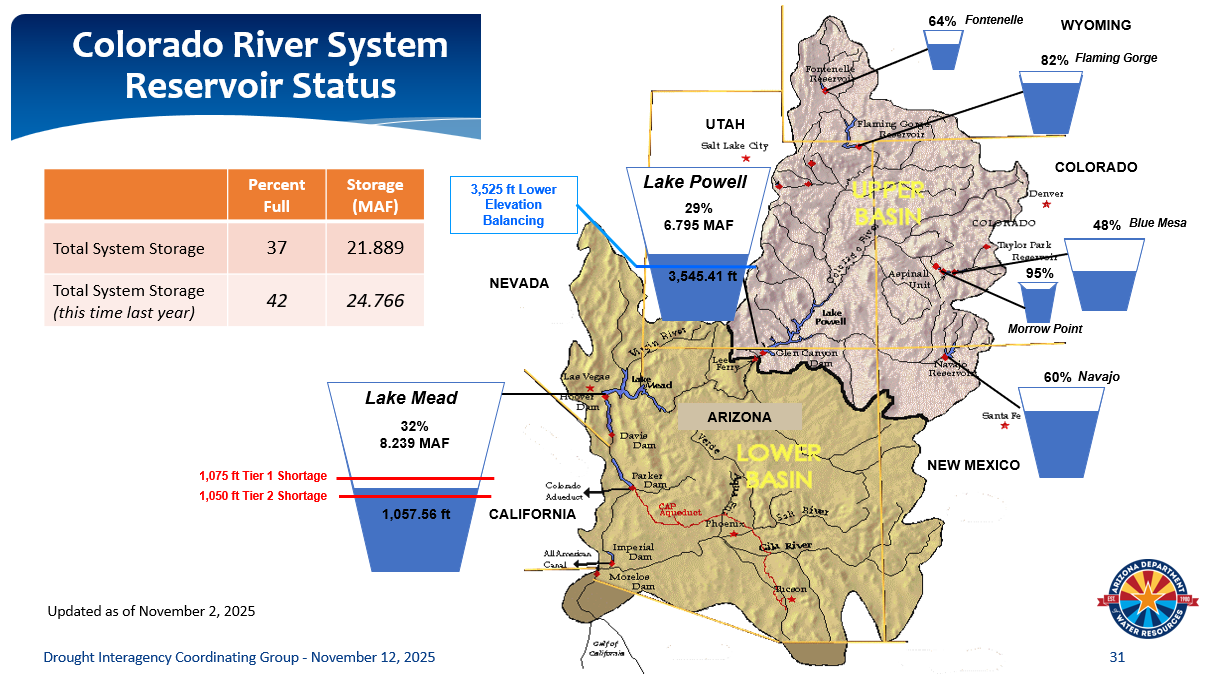
According to the ICG, despite some pockets of precipitation, the overall picture remains one of a state under water stress. The group cited:
• Reduced snowpack and runoff in critical headwater basins, limiting reservoir recharge.
• Lower than average inflows anticipated on the Colorado River and tributary systems.
• Growing pressures on hydropower outputs as water levels decline and operations become constrained.
• Elevated risk of wildfires and deteriorating forest health due to drought conditions, which in turn affect watershed integrity and future water-supply reliability.
Given these conditions, the ICG recommended maintaining both the long-standing drought emergency declaration and the drought declaration. The panel noted that having these declarations in place provides the state and its partners with a structured mechanism for monitoring, preparedness and response.
With the declarations maintained, the state remains positioned to coordinate drought-response actions across state, federal, tribal and local partners. The ICG’s recommendation will be conveyed to the Governor’s office for consideration.