
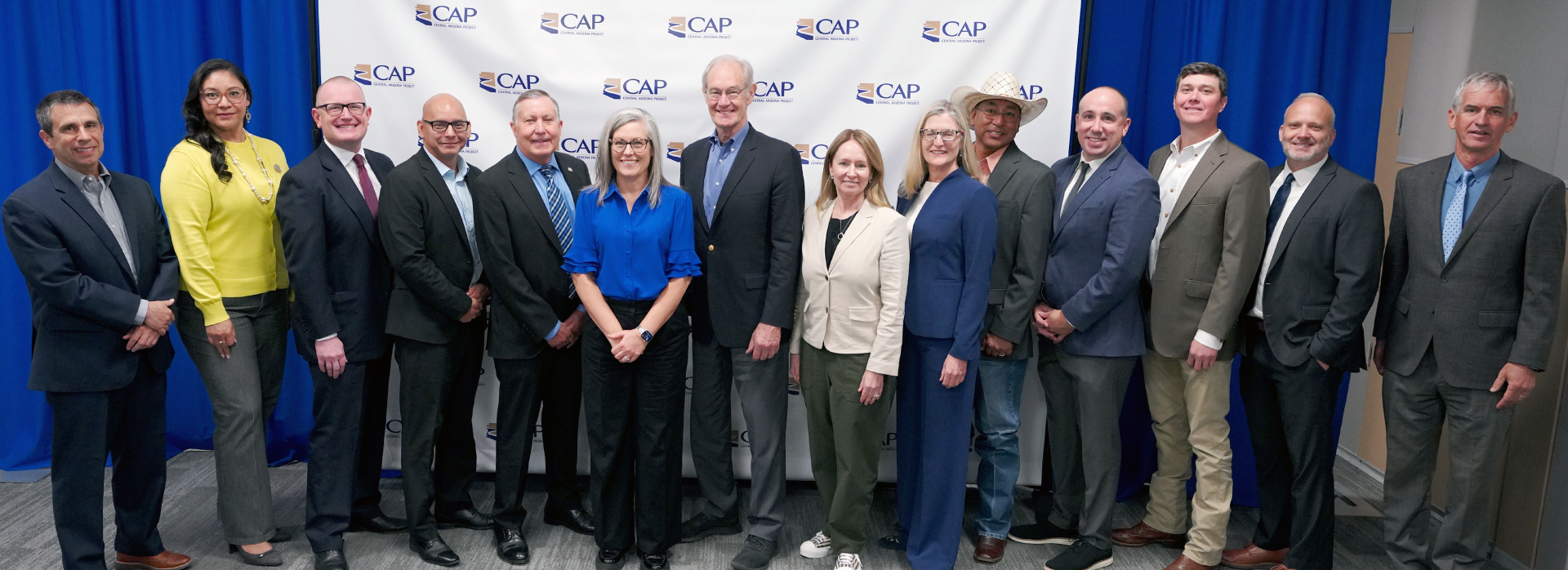
Governor Hobbs convenes “Roundtable” at Central Arizona Project HQ to emphasize Arizona unity during challenging Colorado River negotiations

Arizona Governor Katie Hobbs convened a roundtable
of state water users and other officials on Tuesday to assess the condition of Arizona’s Colorado River water supplies and to increase public awareness of the challenges the state faces as negotiations over the future operations of the river system go forward.
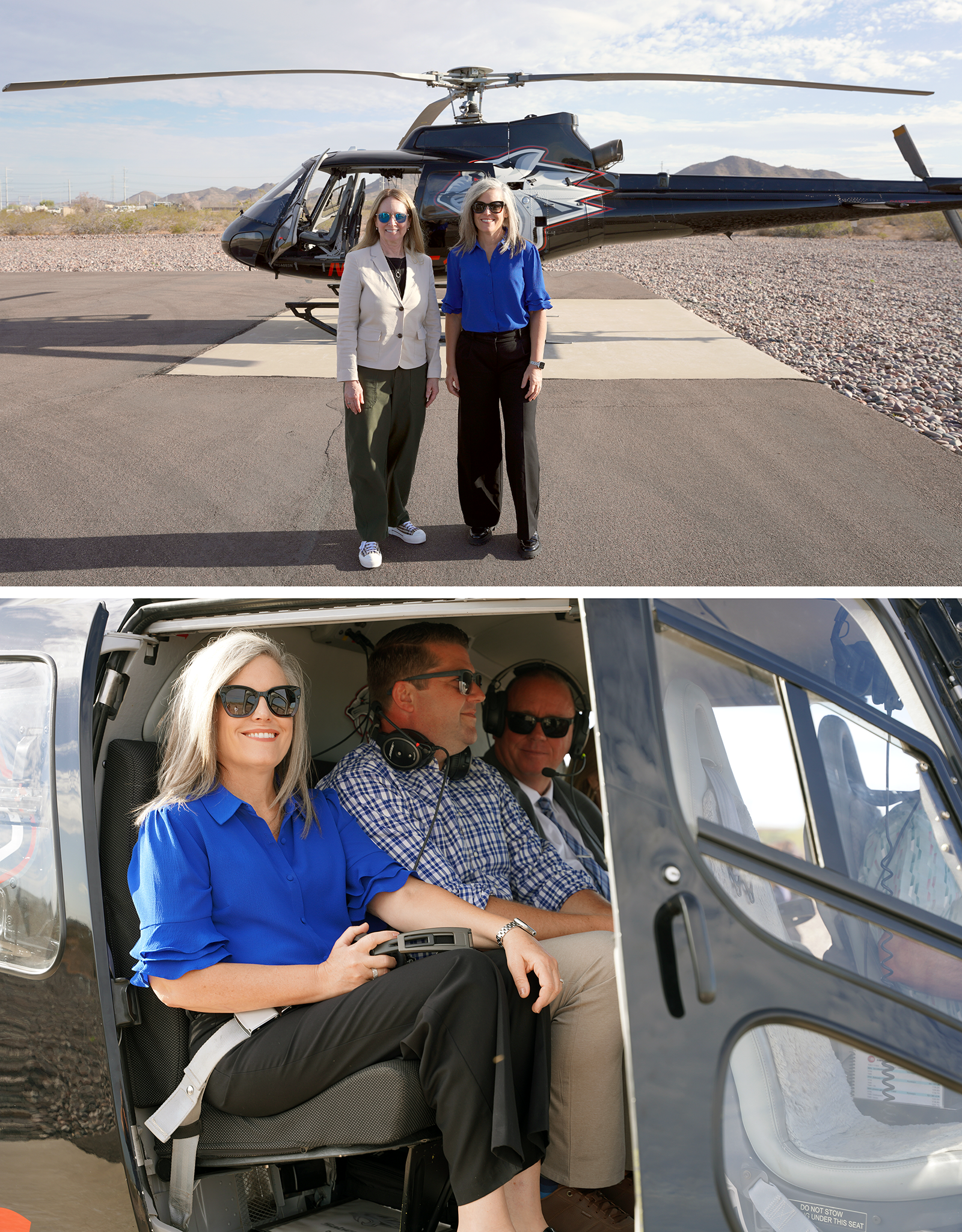
The event at the headquarters of the Central Arizona Project included a helicopter fly-over for the Governor of parts of the 336-mile CAP canal system, which typically delivers nearly half of Arizona’s Colorado River water to central and south-central Arizona communities.
Asked about the on-going negotiations over new guidelines for operating the river system after 2026, Governor Hobbs acknowledged that from her perspective, the negotiations appear more than a little frustrating,
noting that Arizona’s designated representative for Colorado River matters, Department of Water Resources Director Tom Buschatzke, was at the table, I think, hourly having these conversations.

We’ve come to the table with real solutions, real proposals. We have real skin in the game,
said Governor Hobbs. The Upper Basin states have to be willing to take their share (of cuts) as well.
The Upper Basin states are not being asked to accept delivery cuts that are precisely equal in volume to proposed Lower Basin reductions, the Governor told reporters.
They’re only being asked to take some (cuts),
she said. They haven’t taken any. Our growing economy is not just important to Arizona. It’s important to the nation’s economy and to national security - to moving manufacturing back to America. This conversation isn’t just about Arizona. It’s about our country.
Director Buschatzke told reporters following the roundtable discussion that we are at a place now where over the next couple of months we will find out if we can have a seven-state deal or we’re going to find out if a seven-state deal is not going to work.
Operated by the Bureau of Reclamation, the Colorado River system is divided into an Upper Basin,
including Colorado, New Mexico, Utah and Wyoming, and a Lower Basin,
including Arizona, California and Nevada, as well as the Republic of Mexico. Negotiations over the new operating guidelines typically break down into discussions between the four Upper Basin states and the three Lower Basin states.
In remarks to the Roundtable participants, Director Buschatzke noted the points that he has emphasized to his counterparts at river negotiations, including the need for every state and every sector of the economy
to contribute to the solution to the imbalance in the Colorado River system.
Enforceable reductions in water use in both the Upper Basin and the Lower Basin are necessary, he said.
These principles are at the heart of the alternative proposed by the three Lower Basin States in March 2024.
A major element of that Lower Basin Alternative
proposed in March 2024 was the creation of conservation pools
in both Lake Powell and Lake Mead as part of a post-2026 solution, the Director noted.
Director Buschatzke later told reporters at the CAP Roundtable that, currently, the Federal government is helping us with (finding a path forward).
That’s something we asked them to do as recently as February. When both sides feel risk, I think that creates the collaboration we need to find a path forward.
The Lower Basin states already have proposed conserving enough water annually to eliminate the system’s chronic 1.2 million acre-foot deficit.
Lake Mead’s water levels would be more than 100 feet lower today without the action and investment taken over the past 20 years, including nearly 4.7 million acre-feet saved by Arizona since 2014.
The Governor’s Roundtable
event included representatives of Arizona’s cities, tribal leaders, farmers, business voices, and power providers, gathered, as the Governor described, to present a united front as the often-challenging river negotiations continue.